Showing posts with label South Africa. Show all posts

Sunday, June 24, 2012

South African photographer believes theft was hate crime


By Robyn Dixon, Los Angeles Times

JOHANNESBURG, South Africa — It was a most unusual burglary. Thieves got in through the bathroom window and walked past the flat-screen TV, DVD player, expensive camera and a couple of brand-new cellphones. Instead, they took 20 external hard drives and some digital camera memory cards.

It didn't make sense to Zanele Muholi, an art photographer and activist, the victim of the April theft.

Unless …Something cold shifted inside her. Could this be another hate crime against lesbians?

The stolen hard drives, all hidden in different locations around her apartment, were the archive of five years of Muholi's extraordinary work photographing marginalized lesbians in many African countries.

"Seemingly they spent some time searching," Muholi says in a phone interview. "It seemed to be targeted. The content is a major part of my life."

Muholi, a lesbian whose work has been called "immoral" by a government minister, is convinced the theft was designed to suppress her "visual activism," as she calls it.

The 39-year-old is the only black South African artist selected to exhibit her work at the recent Documenta festival in Kassel, Germany, an exhibition featuring hundreds of international artists that is put on every five years. (The other South African chosen was prominent artist William Kentridge.)

Her work on lesbianism and womanhood confronts traditional patriarchal notions of African masculinity and is often perceived as threatening to men in the townships where her subjects live.

Muholi's five years of lost work is a unique record of the lives of black lesbians forced to live underground, in fear of being attacked for being "unnatural" or "un-African," stoned, beaten, even burned. Her photographs celebrate the love and life of black lesbians — and mourn the dead. Muholi documented the funeral of Noxolo Nogwaza, a lesbian raped and killed last year in Kwa-Thema, a township outside Johannesburg.

There's an epidemic of rapes of lesbians in South Africa, disturbingly dubbed "corrective rape," because a victim is told it is to teach her to be a "real woman." Beatings of lesbians, gays and transgender people are commonplace.

The attacks are a blight on South Africa's Constitution, a document that enshrines the right to same-sex marriage, but whose protection for people who are lesbian, gay, bisexual and transgender is opposed by African traditionalists and fundamental Christians.

Richard Lee of the Open Society Initiative for Southern Africa, an African nongovernmental organization promoting democracy, human rights and good governance, compares the loss of Muholi's work to the theft of a Picasso in Europe.

"There should have been a huge outcry by now. Government ministers and artists and academics and journalists should be shouting from their pulpits, because a unique part of South Africa's cultural heritage was stolen…," Lee writes on the organization's blog. "No one else has taken photos like this. No one else has documented this community with so much understanding and so much force and so much beauty."

After the robbery, Muholi's state is akin to mourning.

If you ask her how she is, she responds, heavily, "It's another day." She lies awake at night, and this or that beautiful image captured during her travels around Africa spins into her head.

"There were pivotal moments that I shared with people. I can't go back to those spaces.

"I am so shocked and traumatized and hurting."

But under the grief, the knowledge that someone has been in her apartment also leaves its trace of fear, given the violent homophobia common in South Africa.

"I don't feel comfortable in my apartment. I might be in danger. You never know when your time will come." Known for her courage, Muholi almost cringes, because she feels as if that's been stolen too. "I used to be brave. Now, I'm weak and I am scared."

Muholi's work has always been intensely political and confrontational. Even the white T-shirt she sometimes wears showing two black women kissing is enough to enrage many South Africans.

She says her motive in photographing lesbians is to give faces and voices to the disempowered communities in Africa, and support victims of hate crimes.

"We have to support them, because you never know, I might be next," she says. Among the stolen images were photographs taken at the funerals of lesbians gang-raped and slain because of their sexual orientation, or who killed themselves in despair.

In 2010, South Africa's then-minister for arts and culture, Lulu Xingwana, who was supposed to speak at an exhibition featuring Muholi's work, walked out, calling the images of black lesbians embracing "immoral, offensive and going against nation-building." Xingwana has since been promoted by the overtly traditionalist president, Jacob Zuma, to minister for women, children and people with disabilities.

Since the Xingwana walkout, South Africa's artistic freedom has come under pressure from politicians more than once, with the ANC calling for a debate on the limits of artistic freedom. In recent weeks, South Africa was convulsed by its fiercest debate on artistic freedom, after a male artist depicted Zuma (a polygamist with more than 20 children) with genitals exposed in a painting called "The Spear."

Supporters have set up a campaign to replace Muholi's equipment. But even if they did manage to raise the money, it wouldn't bring back the lost photographs. And even if she could retrace her steps in the different African countries, she wouldn't find the same images.

"Even if somebody sent me back there," she says, "I would not be able to capture those moments."

Sunday, January 2, 2011

Classic Modelling Shots


Top model Iman. Image: Frederic Meylan, November 07, 1986. Location: New York, New York.


Beverly Johnson, walking a Great Dane, and wearing a houndstooth zip-front jacket and pants by Jack Winter, a belted turtleneck, a muffler by Yves Gonnet and a beret by Veaumont. Photographer: Francisco Scavullo, August 1974. Location: New York, New York. A Conde Nast Collection


A model presents a creation by Kenyan designer Nzioki during a fashion show held as part of the Origin Africa Designer Showcase in Nairobi. april 28, 2010.Image: Thomas Mukoya. Location:Nairobi, Kenya.


Black models on Fashion Runway. Image: Hill Street Studios. Location: Gardena, California.


Wenda Parkingson modelling in a train. Image: Norman Parkinson. 1951


Wenda Parkinson models an Aquascutum coat with Zulu men dancing behind her in South Africa. Image: Norman Parkinson. Location: South Africa, 1951

Saturday, November 13, 2010

Model Flaviana Matata

Photo courtesy of Fashion Junkii ON Sugar

Tanzanian beauty queen and fashion model won the first edition of Miss Universe Tanzania Pageant 2007 and went on to represent her country in the Miss Universe Pageant the same year, where she placed among the top 15 semifinalists and ended up in the 6th Place after the fashion parade on the runway. Competing with a shaved hair she was the first of that kind from Tanzania. She now models out of South Africa and recently modeled print advertisement fo Sherril Hill.

Wednesday, May 5, 2010

Hoha! (Pointblank): The Talkingheads on South Africa 2010

"I'm more of a realist. I don't think it will happen in 2010, but it will be something special if an African nation can win it because it's on the continent. I think if it was somewhere in west Africa, with the heat, then you could have said an African nation could win. But in South Africa it will be winter, so it will be more in the favour of the Europeans."

-------Steven Pienaar, South Africa/Everton midfielder predicting with certainty no African team will win the World Cup that begins next month when asked if he thought an African team could win the World Cup


"I think we can go far. Why not? First, it is imperative to go through the group stage. We need to concentrate on this target. We have three matches. First we need a win, and then a draw. This can send us through. Seriously, I think we will go through the group stage. Afterwards, I don't know how far we can progress."

-------Kafoumba Coulibay, OGC Nice/Ivory Coast midfielder when asked by Goal.com on how far he thought Ivory Coast will progress in the World Cup.


"The beautiful game in High Definition is truly a remarkable thing to see. Any football enthusiast will tell you the difference between standard definition and HD is night and day. World Cup 2006 was the first to be shown in HD, but it was rare. It was far less common for someone to own an HD television than it is now as they were more expensive and people had yet to see a need. HD programming was not yet easily available to everyone, let alone on ESPN. It was more common on the networks, which is why World Cup 2006 games being seen in HD were mostly on ABC . HD was still in the beginning stages just four years ago."

-------Jake Islas, European Premier League (EPL) Talk podcaster on one of his five reasons why South Africa 2010 World Cup will be the best tournament.


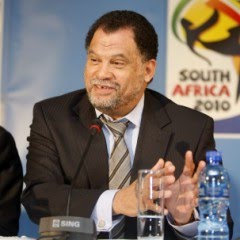
Ever since we first bid for the World Cup, this is a road we have travelled. There have been doomsayers, but we have so far proved those people wrong and we will prove them wrong again.
From the moment Nelson Mandela walked out of prison, this country was written off. But we have struggled hard. You cannot determine your lives by having people say, 'You cannot do this'. Because if we were to have taken that position, I would still be living under apartheid. There is only mild hyperbole in this invoking of history. The World Cup is a massive chapter in the development of the democratic South Africa, an event of infinitely greater significance to its hosts than to Germany in 2006 or to France in 1998. And it will continue to have its doomsayers, but you can only hope that in 49 days they are wrong."

-------Danny Jordaan, Chief Executive of South Africa 2010 on the critics and his organizing committee about the World Cup.

Saturday, March 14, 2009

Nigeria becomes Africa’s biggest mobile telecom market

The Nigerian telecom market grew by 23 percent (in US dollar value) in 2008, generated $8.4 billion in overall telecom service revenues, notes Yejide Onabule, analyst at Pyramid Research and author of the report. "With mobile subscriber penetration at just 42 percent, Nigeria’s total telecom revenue is expected to increase at a CAGR of 5.7 percent from US$8.42 billion in 2008 to $11.14 billion in 2013," Onabule says.

Since liberalization of the market in 2003, Nigeria’s telecom industry has experienced exceptional growth rates, which is attracting new operators. "The bulk of service revenue will continue to come from mobile, which will generate 83 percent of total service revenue over the next five years," Onabule adds. [READ MORE>>>]

World Cup to 'change world's view of Africa'

PARIS (AFP) — Danny Jordaan, head of the South African 2010 World Cup organising committee, said on Friday he wanted to transform people's world view of Africa through the staging of a successful tournament.

Visiting Paris, Jordaan said the event would be an opportunity "to change people's perception of the African continent. We have to see Africa as a continent for investment in tourism and trade".

He added that the tournament, the first Africa will have staged, was a chance to put the whole continent in general on the map and "celebrate the best" it had to offer. [READ MORE>>>]

Tuesday, February 17, 2009

PAFF Final Beat


It had taken exactly eleven days from the Baldwin Hills Crenshaw Plaza Mall on the Crenshaw thoroughfare of the “Black Township” to the nine hundred block of Washington Boulevard in Culver City which stretches to the Washington Corridor in Los Angeles in an event that has gone through mixed reviews on the side of the vendors who seems to be the ones complaining and talking about the 17th Annual Pan African Film and Arts Festival (PAFF), which ended in Los Angeles, last night, and how the show came out bad vendors are now threatening lawsuits for being ripped off by the organizers of the festival.

I’m not sure if the recession should be blamed for the buy-sell apathy in which an estimated 10,000 people are losing their jobs daily; a record breaking account since the Great Depression. Nobody, however, is sure of the outcome since experts are predicting until the end of 2010 before things could probably be shaping up economically in what should be expected to be another cycle of economic prosperity, that is, if Wall Street is put in place.

But despite all that, a whole lot is still happening in the City of Angels, and people are still hanging out even though what use to be a livelier event on a sad note of bad economy, the 17th Annual PAFF was very obvious of economic collapse. “This is terrible,” one of the vendors who displayed his African accessories, a variety of beads, necklaces, earrings, shea butter cream and some artifacts complained of a slow, hopeless market. “How am I going to survive this environment with a $40 a day sale and all the bills that are climbing at an alarming rate.”

If recession is one thing to blame, one should be asking about all the line up of events tailored to run through May in Los Angeles alone. While PAFF and a series of its activities were going on in a two location event, some cultural stuff was also taking place all over town. The Vintage Hollywood Private Club on the Washington Corridor has taken its activities to another level. Throughout the month of February, classic black films – “Stormy Weather,” “Carmen Jones,” and “Cabin in the Sky” will be screened and admission is free. So there’s a lot of vibes going on in ones Hollywood. A full bar and lots of Los Angeles goodies at this newly rejuvenated joint is a hangout you don’t want to miss.

I think it’s quite fun when one walks around the marketplace, the 17th Annual PAFF, in a different mood this year because both patrons and merchants in what use to be a merry-crowd in the eleven days festival vanished this time around and it’s not funny. A security guard at the front entrance of the mall: “Ain’t nothing wrong with the fuckin’ economy. It’s all a set up; you know what I’m saying? And you blame George Bush. I don’t have anything with what’s going on with the fuckin’ economy and if they feel like cutting my hours I sho’ fuckin’ will quit and take unemployment…And I sho fuckin’ will sue their ass, that’s right”

The guard is not happy for being sentry, standing post on a little-bit above minimum wage and mad as hell because his relief is behind schedule and he wants to “get the fuck outta here,” cuz, it’s “ass-kicking time.”

On the other side of the mall behind Wall Mart, there is a makeshift massage parlor run by some Asians and as it happened their business boomed and patrons were trooping to relieve a nerve-wracking recession-proof tension.

It wasn’t only the cultural thing that got attention during the festival. People, not related to the festival came from all over. I ran into Carolyn J. Garner who happens to be doing some worthy stuff and we did hang out talking about a bunch of things that could lift the spirit of the African “if all hands are on deck.” She did the math – uncountable trips to Ethiopia providing medical services to the underprivileged and proud of it on many grounds – being blessed and having the opportunity to lend a helping hand in an area of the world where the government has turned the other way. Carolyn had held me for more than an hour talking about the unfortunate events of slavery and the mess it created for centuries to come.

Interestingly, though after all the tough talks about sharecroppers, slavery and all that, we shifted to the screenings at the film festival and began discussing the ones that made the headlines. Before we began, I had mentioned Sophie Okonedo and her role in “Skin:”

And her parents were white South Africans. And born of white parents in apartheid South Africa, she looked black. And she was tormented and unaccepted in a white society. And she was black. And she falls in love with a black man. And she alienates her parents. And she relocates elsewhere to a township. All of this happened because she was born black because of her genetic abnormality. And her name is Sandra Haing. And she paid a surprise visit at the screening of “Skin” on February 11 at the Culver Plaza Theaters. And there was a photo session. And PAFF founder Ayuko Babu was all smiles in that photo-op.

Another film of interest was, as part of the routine Brazilian Carnival and the PAFF, the presentation of the 50th anniversary of “Black Orpheus” which won an Oscar for Best Foreign Film in 1960.”Black Orpheus” had been widely advertised and sponsored by the Ngolo Arts Preservation Society and Amoeba Music.

A lot of fascinating films were shown during the course of the festival. There was “Scared Justice,” a film about the Orangeburg massacre where black students protested the Orangeburg bowling alley’s refusal to admit African Americans when South Carolina State Troopers and other law enforcement agents fired on them. Three were killed and twenty-seven injured.

And there’s Charles Burnett’s “Relative Strangers” starring Eriq LaSalle, Cicely Tyson, and Michael Beach about a “successful man who, fearing failure, separates himself from his family until he receives word of his father’s death.”

And there’s “Making the Rhino,” about environment, tourism and conservatism from the Maasai people of Kenya and Namibia’s Himba people point of view.

And, finally, not to forget the South African drama "Jerusalema" directed by Ralph Zinman, typical of Nollywood films about Lucky Kunene (Rapulana Seiphemo) who transformed himself to being a real estate crime boss after years of street carjacking to make a living. The film opened the festival on a red carpet at the Director's Guild of America on Sunset Boulevard in Hollywood.

Wednesday, February 4, 2009

Why The 17th Annual Pan African Film & Arts Festival will face some Problems with Vendors and Festival Goers

About a month or so ago, while checking out who was jamming at the World Stage Performance Art Gallery at Leimert Park, my partner in crime, a criminologist turned art collector and trader – call him Obi, because that’s his real name -- told me that the Pan African Film and Arts Festival (PAFF) may be encountering some problems at this year’s annual event for many reasons. (We hang out sometimes and talk local politics and some cultural stuff, but this time around, everything has gone down the drain with an economy gone bad no one knows what’s ‘gonna’ happen tomorrow). According to Obi, as one who is allergic to West Los Angeles, especially Culver City, known for its camera on every nook in this “little bit well to do community and curious-minded cops,” the decision to move the film part of the 17th Annual Pan African Film and Arts Festival to Culver Plaza Theater on the nine hundred block of Washington Blvd. in Culver City is “just a bad rap.”

The organizers’ of this year’s festival’s decision to move ahead with a change of venue – from the Magic Johnson Theaters on the hub of the “Black Township” within the Baldwin Hills Crenshaw Plaza to a not familiar suburb of Culver City -- may have made a bad decision, thus dissuading festival goers due to its new location which is not too familiar with the vendors, tourists and black filmmakers who have been used to the Magic Johnson Theaters on the Crenshaw thoroughfare for many years now.

Many vendors and festival goers I spoke to said the new venue has killed their desire to rent booths and watch the films at a distance for the fact movie goers who normally watch feature films and documentaries at the festival, and then stop by the booths to buy items and artifacts related to the films they watched by walking through the mall where the arts are on display may find it difficult shuttling about six miles from the Culver Plaza Theaters in Culver City to the Baldwin Hills Crenshaw Plaza where African cultural products are on display.

Meanwhile, the new schedule at this year’s festival has begun to blow some unpleasant air in many years of the festival’s seventeen year history. “The idea that we walk back and forth in the same complex is what connects us to the festival,” said electrician John Hall who lives not too far from the Baldwin Hills Crenshaw Plaza. “And it is, believe it or not, what makes this festival very unique. I’m not going to bother driving to Culver City. It is way out of the hood.”

And with a bad economy we are now aware of, coupled with the austerity measure that comes along with it, especially in a “New Dawn” we had expected better things ahead on a historic presidency of Barack Obama, never minding the economic meltdown as never seen before since the Great Depression, (so the experts say even though scholars in economics knew in detail the articulated theory of British economist John Maynard Keynes who advocated government intervention in a free market economy is required at a time of economic crisis to better control the economy, and especially unemployment), the new site may attract a wide range of varied ethnicities perhaps to test a new market and see how it plays out. Would that be impulse buying in this case? Who knows?

With the state of California being hit hard, on a budget crisis that has dragged on for three months, out of cash and desperate for a way out of the mess created by a Republican governor and a Democratic majority in the state Assembly, following a tight time, this year’s festival and the move to Culver City is expected to witness the lowest turnout, even though some black “big rollers” will be showing up and playing important roles during the two weeks cultural event. As already planned by the organizers, this year’s festival will be honoring Cicely Tyson, actor Omar Benson Miller will be receiving the Canada Lee Award, California State Assembly Speaker Karen Bass will be honored with the Community Service Award and Marla Gibbs will be presented with the Lifetime Achievement Award.

However, a close look at some of this year’s line up of feature films and documentary is quite interesting and reveals that the South African drama “Jerusalema” and the presentation of “Skin” starring London-born Nigerian-Jewish Sophie Okonedo could persuade festival film goers to change their minds and give it a shot for that six miles difference as a result of venue change. "Jerusalema" directed by Ralph Zinman opens tomorrow, February 5, at the Directors Guild of America complex on Sunset Boulevard in Hollywood. The opening ceremony will be hosted by Blair Underwood.

On "Skin" Okonedo plays Sandra, born in South Africa by white parents but Sandra mysteriously looked black, alienating her parents and falls in love with a black dude. Opens at the Culver Plaza Theaters on February 11, at 7 p.m. The festival runs from Feb. 5 through Feb. 16. Over 175 films from all around the world will be presented at the festival, and all films are culturally related to descendants of Africa.

Go Africa Go!

Thursday, November 20, 2008

Phuti Malabie, Woman Of Substance


Phuti Malabie has been described by Wall Street Journal as one of the women to watch towards overclass status in the corporate world as more female corporate elites sprangs up.

Born in South Africa and graduated with a degree in Economics from Rutgers University, New Jersey and a Masters Degree in Strategic Management from De Mont University, Leicester, UK, Malabie started working for Fieldstone, an international boutique investment firm that focuses on energy companies and manager, Project Finance for Development Bank of Southern Africa before sitting on the executive board of several companies.

She is the Chairperson of Gigajoule Africa (PTY) Ltd; Managing Director of Shanduka Energy and Executive Director Mondi Shanduka Newsprint.

She loves reading, travel and golf. She was awarded "Top in Project Finance" by the Association of Black Securities & Investment Professionals (ABSIP) in South Africa in 2003, and nominated "Young Global Leader 2007" by World Economic Forum in Switzerland in 2007.

Monday, November 3, 2008

South Africa's Nyasha Zimucha Crowned Miss Africa USA 2008-2009

Miss South Africa Nyasha Zimucha being crowned Miss Africa USA 2008-2009 by Miss Africa 2007-2008 Mfonobong Essiet as Miss Black USA Kristen Elizabeth White looks on. It all happened on Saturday, November 1, 2008 at the Clayton County Performing Arts Center in Jonesboro, Georgia.


Photo courtesy of Miss Africa USA

Tuesday, September 30, 2008

South Africa's Nyasha Zimucha For Miss Africa USA 2008

The line up for this year's Miss Africa USA Competition is obviously becoming engaging and the characters quite interesting. 23-year-old Nyasha Zimucha who grew up during the Apartheid era in South Africa knows what it is and as a living witness she learned to forgive and renconcile as did the Truth and Reconciliation Commission established by the Nelson Mandela administration when the curtains of Apartheid fell.

Nyasha, now an activist due to the recent racial attacks in her native land is promoting peace and oneness so xenophobic attacks could be stopped once and for all, and peace could be given a chance. And as Miss South Africa USA 2008, she is definitely using her position to effect that.

Adding to her resume, she is a dancer, a singer, a model and public speaker. She is currently filming a show titled "Little Miss Perfect" about a "celebrity judge on a Pageant show" which airs on WETV in late Fall.

On November 1, at the Clayton County Performance Arts Centre in Jonesboro, Georgia, Nyasha will be joining Esosa Edosomwan (Nigeria), Victoria Njau (Kenya), Daniele Ntahonkiriye (Burundi), Daniele Fochive (Cameroon), Andrea Mvemba (DR Congo), Kristle Simpson (Ghana), Imat Akelo-Opio (Uganda), Tanta Badjan (Gambia), Belloh Julius (Liberia), Mariamma Brown (Senegal), Philippa Lahai Swaray (Sierra Leone), Nathali Zambakari (Sudan) Bita Dioa (Guinea), Aziza Elteib (Ethiopia), Mutinta Suuya(Zambia) and Busi Mlambo (Zimbabwe) in the race for the crown.

Goodluck and I am looking forward to this event.

Go Africa Go!

Photo courtesy of Miss Africa USA

Thursday, August 28, 2008

WORLD CUP: Super Eagles Meets Bafana Bafana

Much has been talked about the elite squad of Bafana Bafana as South African national coach Joel Natalino Santana predicts the Nigerian squad are "beatable" when both teams meet on September 6 to slug it out in Port Elizabeth, South Africa. The Rio de Janeiro, Brazil native needs to work harder to avoid a Bafana Bafana drop out from the Nations Cup in 2010 which would be held in Angola. South Africa is behind and if they should lose to Nigeria, their chances for a 2010 Nations Cup may slip away.

South Africa has not beaten Nigeria in any major tournament but Coach Santana is assuring South Africans that he can make it happen.

On the other hand, replacements has been made on the Nigerian squad by Coach Shuaibu Amodu due to injuries. Christian Obodo replaces John Mikel Obi while Joseph Akpala replaces Obafemi Martins.

The game would probably be quite close but I think Nigeria has a better chance and would take it at the games crucial stage.

The Line: Nigeria by 2

Wednesday, February 13, 2008

A Governor Crying Blues

The governor of an Igbo related state in 'Nigeria' is sounding some church bells that the so-called most populous nation in Africa is 100 years way behind South Africa and Namibia. I hear you my friend, and I'm wondering what resulted to the wake-up call at this very critical time when all supposedly should be well with an oil rich nation which has enormous resources including human capital to sustain a nation that has permanently been on life support since its birth. According to the cry baby and I'm not sure if this was his first trip beyond his hut in Owerri, he acknowledged the fast pace of developments in South Africa.

The crying governor cited "credit, mortgage and pesion schemes" among others as a structure that effects any advance nation. If this governor is serious, he should start from his own bedroom in a clean up to turn things around and make his surroundings a better place. Of course, he wants everybody to get busy and now I know why.

Friday, October 19, 2007

Lucky Dube Remembered Forever


LUCKY DUBE’S RECORD LABEL, GALLO, MOURNS HIS TRAGIC LOSS
The staff of Gallo Record Company are devastated by the news of the tragic passing of reggae legend Lucky Dube. Lucky was slain in an attempted hijacking in Rosettenville in Johannesburg last night, at approximately 8pm, whilst dropping off his children at a family members house.

Although Lucky attempted to escape the scene, he had been fatally wounded from the hijacker’s attempt to steal his motor vehicle, and he died almost instantly.
Senseless and random, the death of Lucky Dube leaves a great void in the music industry, as 25 years of music suddenly ends in tragedy.

South African born but globally revered, Lucky Dube was one of the country’s most toured and beloved artists ever. His music touched millions around the world, primarily through his 22 recorded albums - in Zulu, English and even Afrikaans - many of which have been record breakers with phenomenal sales from around the globe.

As a frontline artist in the reggae genre, Lucky's creativity and inventiveness kept growing.
Compelling in his musicianship and intriguing in his lyrical content, Lucky's sonic daring to take his genre to new heights never failed to amaze even the most ardent fans, whilst reigning in new devotees to his magic every day.


His energetic band toured with him from continent to continent as South African musical ambassadors, and his live performances have earned him fans and accolades the world over.

Lucky joined Teal Records (later to become Gallo) as a fresh-faced young Mbaqanga singer in 1982. Five albums later he found a genre that spoke to his soul and changed the way he viewed the world. This genre was Reggae.

With his long-time sound engineer and best friend Dave Segal, he created some of the most legendary pieces of reggae music ever recorded, including the tracks Prisoner, Taxman, Slave, Victims, Together As One and Respect – all social anthems that garnered him the adoration of the people of his country - and across the globe.
Lucky was an artist that continued to break international barriers and recently just signed a deal with Warner Music International, securing him album releases across Europe of his latest album Respect.

Ivor J. Haarburger, CEO of Gallo Music Group is deeply saddened by the loss. “Lucky was not just an extraordinary artist, he was a personal friend. We go back over twenty years and had both a business and personal relationship. It’s so sad to lose such a great friend and so tragically, why?”

There are very few words that capture the magnitude of this devastating loss. As a musician, father and colleague, Lucky was one of the most charming, respected, selfless and dedicated people to have lived. He will be sorely missed.

Lucky Dube was survived by his new wife Zanele and his 7 children Bongi, Nonkululeko, Thokozani, Laura, Siyanda, Philani and his brand new three-month old baby Melokuhle.

Tuesday, August 28, 2007

IPI NTOMBI, THE MUSICAL

I wasn't even sure if it was music or a group of villagers telling some kind of story in a language not familiar. I had taken the bus from Eastside heading to Lagos when busriding was fun and easy without much ado. I reached Lagos and got stuck at Ido Motor Park where buses from the Eastside called the last bus stop, that is, if you travelled afar, beyond Imo River. Sweet journey, as it was, and reaching the city, life would change dramatically. Still a hippy, and still feeling like bursting loose, the Chuck Brown and the Soul Searchers way, it was indeed a long journey by bus.

Reaching my destination off Ojo Road, a two record set sitting on a table was playing on a turntable. It was Bertha Egnos "controversial musical Ipi N'Tombi" meaning where are the girls, playing and my mood twisted all of a sudden from the funk era. I wasn't really sure if that was my kind of music, but learning for the fact the Apartheid regime has caused too much pain to the black population in South Africa, I began to pay attention. I played the music over and over again and got a clue of what pain and suffering was all about.

The South African musical about a marriage ceremony for a young couple, a witchdoctor, a Boer settler and Zulu warrior "once engaged in bloody battles" led by lead singer Margaret Singana had no parallel to any musical of the day.

The album, produced by a mother/daughter team (Bertha Egnos and Gail Lakier), from the opening track of a well-rehearsed lyrical stage perfomance to the drumbeats of The Warrior, no doubt, you will be moved by the time you are done listening to every track, which of course are all masterpieces.

I have taken time to listen to all the tracks over and over again, and it's just amazing. For the record, Osibisa, remade "The Warrior" during the groups PYE years in London.

The Tracks:

1. Ipi Ntombi
2. Narration; Sesiya Hamba; Drinking Song; Thando Le Phe
3. Korbosha (Down By The River)
4. Andy's Song
5. Moriva
6. Hakelejeje
7. Narration; The Batism; Roll Up Yonder
8. Bona Noga
9. The Witchdoctor; Mother Mary
10.Narration; Nadia
11.Egoli
12.Serantebhule; Pennywhistle
13.Emdudeni; Uhlele
14.The Click
15.Narration; The Child
16.Narration; Mama Tembu's Wedding
17.Baby, Baby; Soweto By Night
18.Wishing
19.Ndoba Sathini Nina; Zimbaba
20.Baby Baby
21.Shosholoza
22.The Digger
23.Narration; Lashoni Langa
24.The Warrior
25.Bayete
26.Ipi Ntombi